
Weather : Our Microclimate
Project Objective
Identify key local climatic factors in Las Cruces, then design, implement, and test targeted mitigation strategies for each.
Our Microclimate
We believe that getting to know the quirky layout and environmental nuances of our patch of land is half the battle. Sitting in a hollow right at the top of a mound, our setup is pretty unique—just a few hundred feet below some friends, yet during the winter we can somehow run 3 to 5 degrees warmer or 5 to 8 degrees cooler than them! Because we're tucked down in that hollow, we also catch a lot less wind.
On top of that, we've got established pine trees throwing some much-needed shade, and we're actively planting more canopy trees. That green cover helps knock down temperatures, bump up the humidity, and block out most of the wind. Even so, we still get hit with full-blast solar radiation and the dust from the seasonal storms that roll through every year.
All of this means that even on a compact one-acre plot, different zones of the farm react to the elements in entirely different ways. It’s up to us to bridge the gap with mitigations and make sure every plant is tucked into the exact spot where it can genuinely thrive.
Temperature Extremes
Living and growing in the high desert means rolling with some intense temperature swings. Summer days regularly cruise past 100°F (38°C) for days on end, giving us only modest relief once the sun goes down. That kind of heat puts serious pressure on plant respiration, root zones, and the soil microbiome. On the flip side, winter nights can drop down to a biting 23°F (−5°C), making short work of anything that isn't built to handle a freeze.
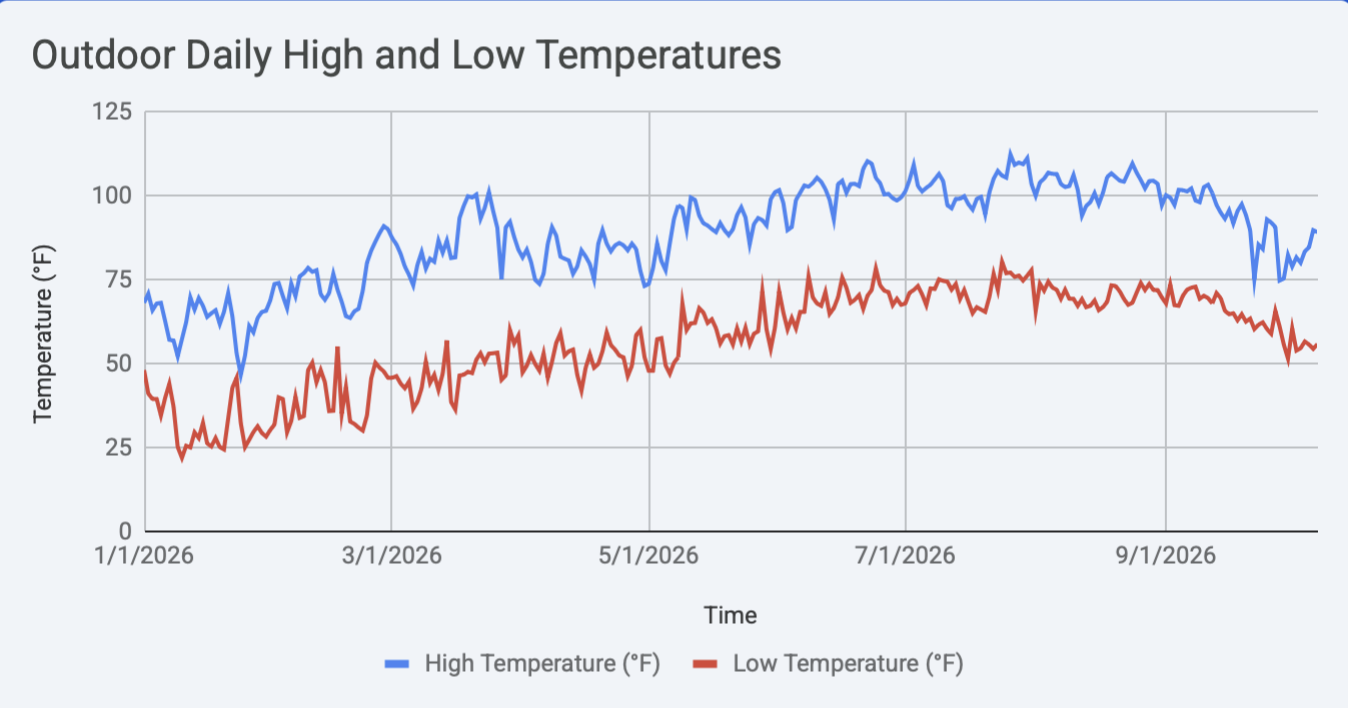
Daily High/Low Temperature Chart (Click image to enlarge)
Field Observations & Mitigations
Mulching is our go-to frontline defense for insulating root zones and keeping soil life happy through both scorching heat waves and freezing snaps. We pile free municipal compost thickly around our fruit trees. Early on, our apples, Meyer lemons, and figs flashed clear signs of stress under a thin 1-inch layer. Bumping that coverage up to 3+ inches cleared up those stress indicators right away. Since mulch breaks down naturally over a couple of months, keeping it topped off is a regular part of our routine.
Mother Nature has relied on this exact strategy for centuries via dropped leaves and dying grasses, and it truly works. Even when a harsh winter freeze damaged the upper branches of a young citrus tree, a deep layer of locally sourced straw (stacked up to 9 inches where possible) kept the rootstock and grafted trunk safe, snug, and alive.
We have some established Pine trees that provide a natural shade canopy for a small portion of the farm. We have planted additional trees that will grow up and provide the much needed shade and humidity canopy.
To protect the vegetable garden, we built a sturdy metal pipe frame to support a white shade net. We intentionally overbuilt the framework so it could easily stand up to our heavy spring winds (pun intended!), adding extra frames wherever the summer afternoon sun hit hardest. We specifically chose a high-quality white shade fabric over cheaper black alternatives; the white material is durable enough to stretch tight across the frame while reflecting heat to genuinely lower the ambient temperature underneath.
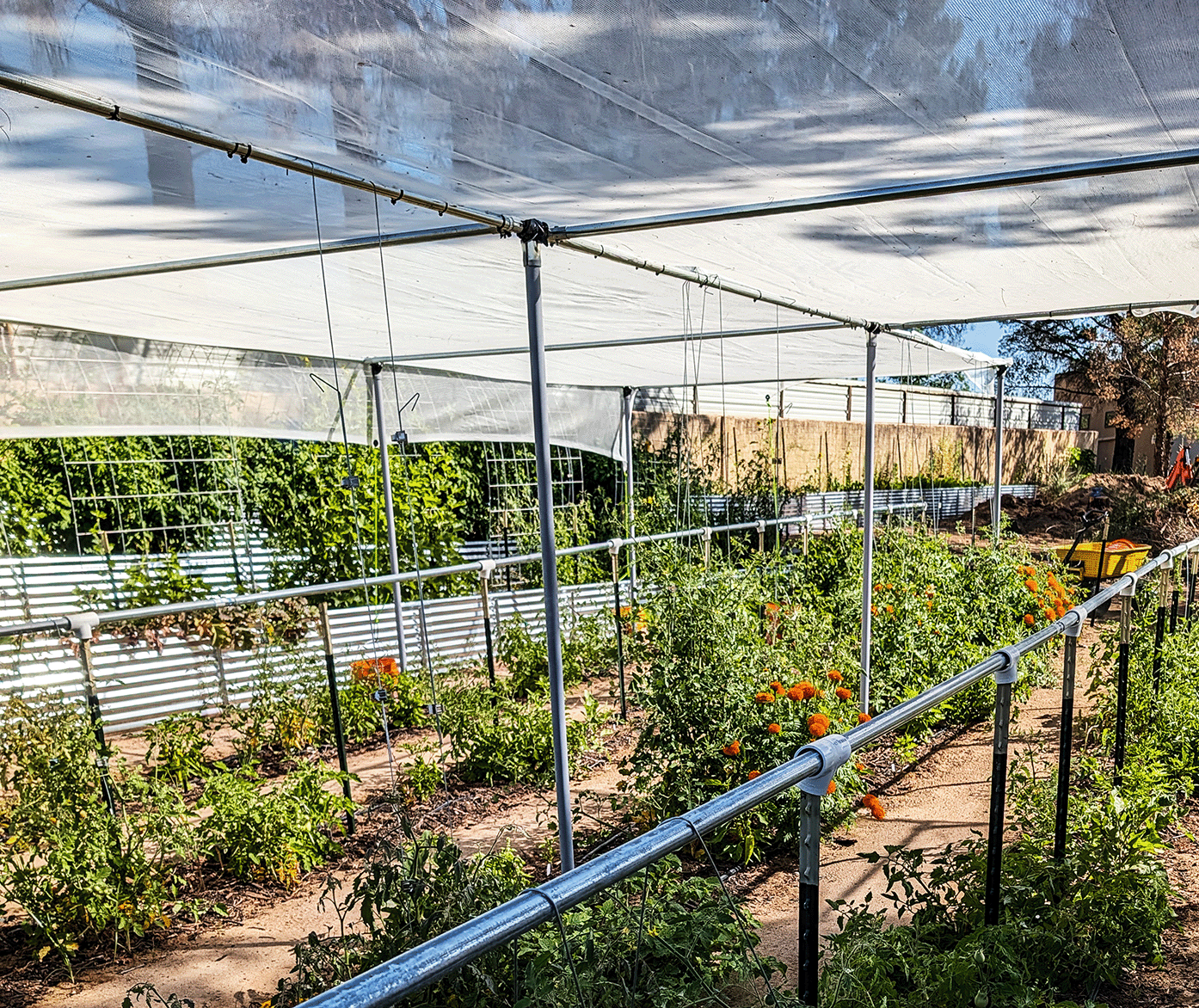
Shadenet Frame over garden beds (Click image to enlarge)
We also set up a trellis system that pulls double duty: it supports climbing crops while creating natural, cooling shade underneath as the plant canopy fills out.
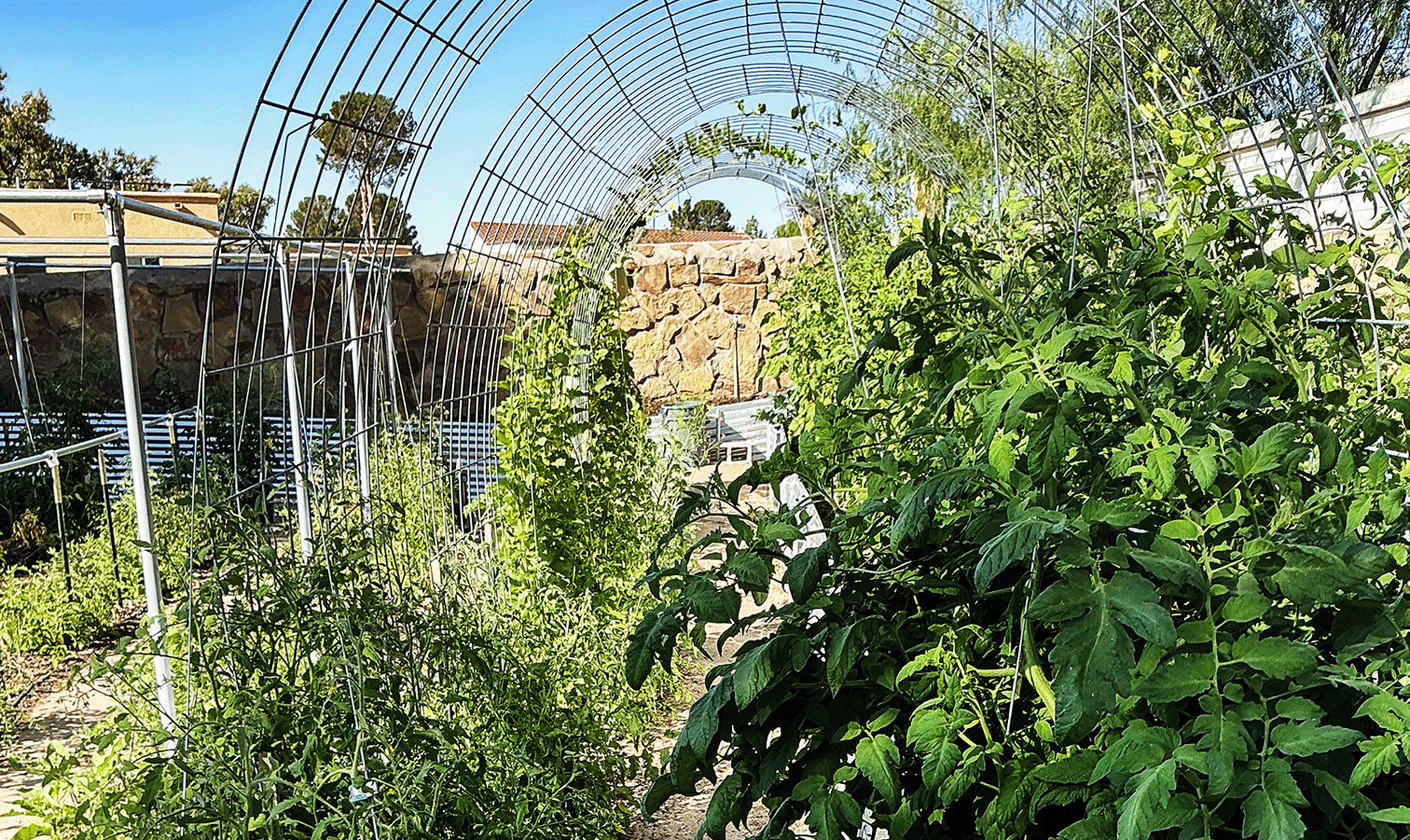
Shade Trellis with dense crop growth (Click image to enlarge)
When the sun is beating down, humans aren't the only ones sweating it out—plants feel the heat too, making it crucial to keep an eye on their cues. A bit of daytime wilting or leaves curling up is usually just part of their natural self-defense. Before you panic, check the ground temperature and moisture level: go ahead and shove a finger right into the dirt. If it's bone-dry or scorching, give them a good drink of cool water to lower the soil temperature. One quick warning though—make sure the water sitting in your hoses isn't boiling hot from the sun first. (Yep, we've definitely learned that one the hard way ;-P)
When winter freezes threaten, we move potted plants into our permanent greenhouse and set up temporary enclosures over in-ground plants or oversized pots. These spaces reliably stay 5°F to 10°F warmer and stay completely frost-free. The temporary setup on the east side is a particular favorite—it catches the early morning sun and warms up within 30 minutes of sunrise, neutralizing those freezing predawn lows.
On the flip side, western-facing greenhouses turn into absolute pizza ovens during summer afternoons, trapping heat so quickly it can scorch tender seedlings and cuttings. That said, tougher potted plants with good cross-breeze actually love the extra warmth and humidity—though the local mosquitoes do too (which we dive into over in the pests notes)!
To move past pure guesswork and observation, we are currently installing an automated temperature and humidity monitoring network across the greenhouse and garden beds so we can back our field notes with precise empirical data.
Solar Radiation
Due to high elevation and minimal cloud cover, Las Cruces features some of the highest solar radiation in the country. Based on our limited knowledge on this front, we chose to leverage UV Index for quantification. We had 9 days where the UVI was over 10 and this is what really damaged some of out young trees and plants. We lost some berries and severely damaged our Apple trees.
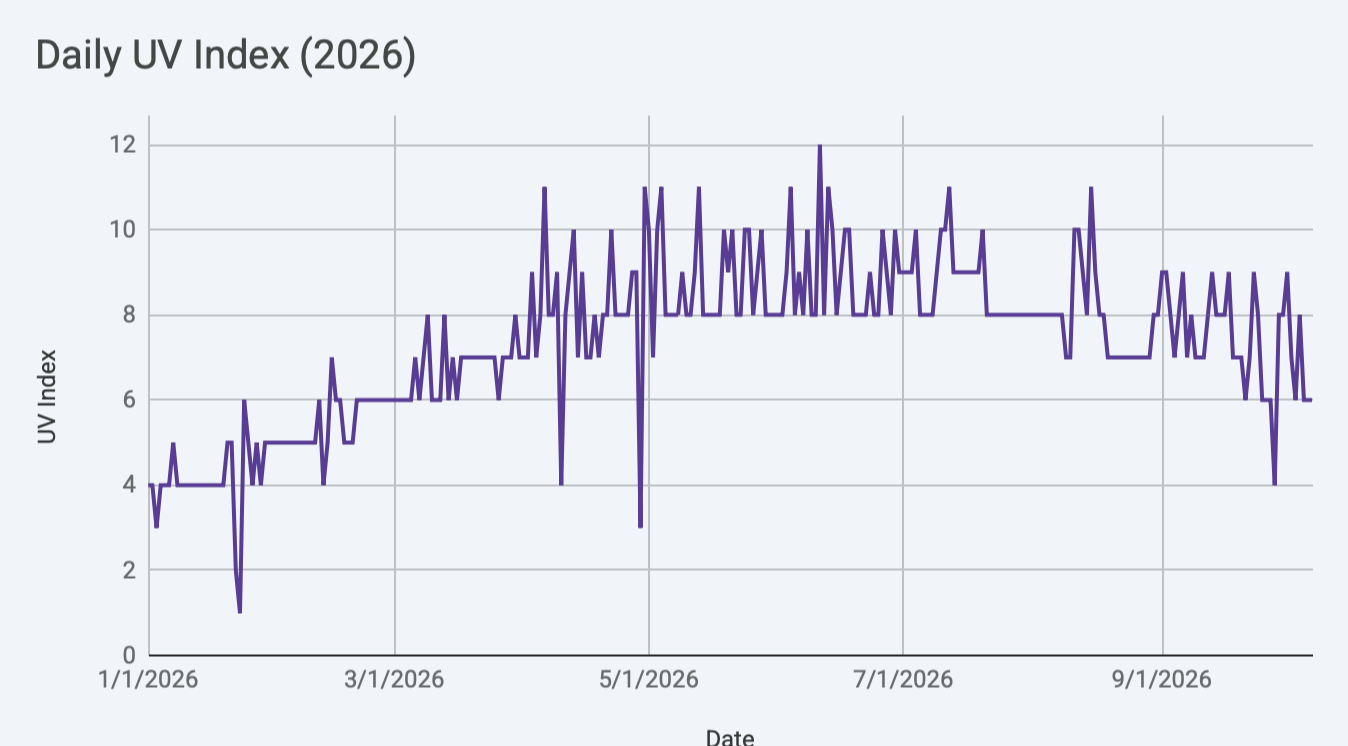
Solar UV Index Chart (Click image to enlarge)
This turned out to be a huge learning curve for us—while we were busy shielding the young trees from the blazing heat, we completely missed the unexpected damage from the Solar Radiation that followed. Moving forward, we're going to start experimenting with shade netting specifically for our younger plants. Even so, we're confident the rest of our crew will bounce back, outgrow it, and come out much tougher for the wear.
Wind Patterns
Between the wide-open desert expanse sitting directly to our west and the natural wind funnel that roars down from the north, our farm definitely catches some high-velocity wind events that suck moisture straight out of the plants and soil. Because those gusts tend to sweep in from multiple directions, we've decided not to implement traditional ugly wind barricades.
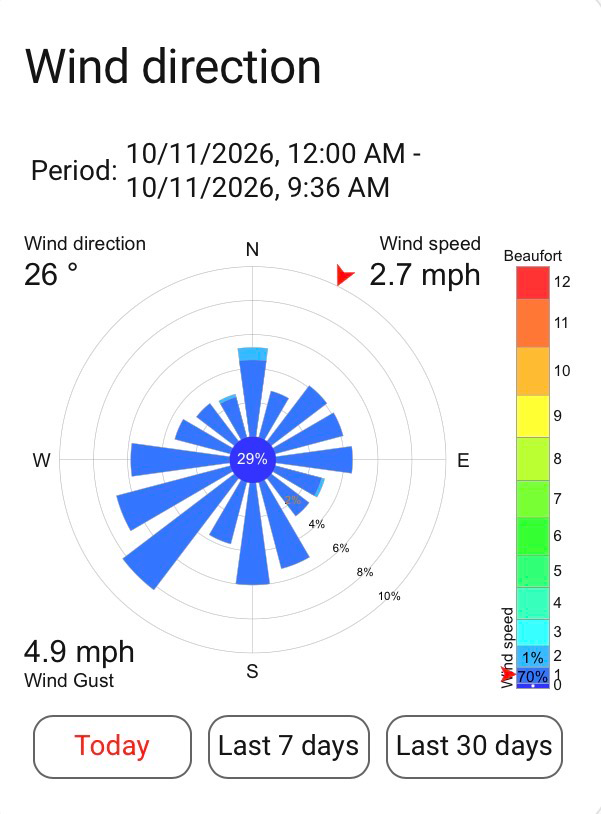
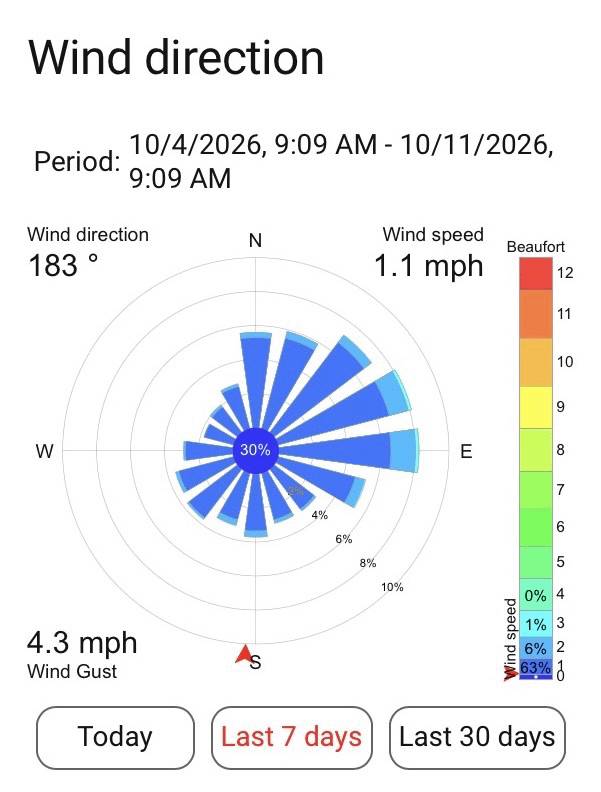
Today's and Last 7 Days Wind Readings (Click images to enlarge)
Mitigation Strategies
We've had to be intentional about choosing plant varieties that naturally know how to stand their ground. More often than not, fruit trees spend their entire first year focusing inward—strengthening their trunks to handle the beating. You can actually see it in action: our Meyer Lemon started out with a trunk just under a half-inch in diameter when we first planted it, and six months later, it measured nearly three-quarters of an inch thick and finally stands firm instead of swaying in every little breeze.
Monsoon Rains
The majority of annual rainfall is compressed into approximately two intense monsoon months—if we are lucky. Due to the Soil Amendments that we have put into place, we are not seeing any runoff water and the water is all being absorbed within minutes. We are sure that there is a limit, we just haven't seen it yet.
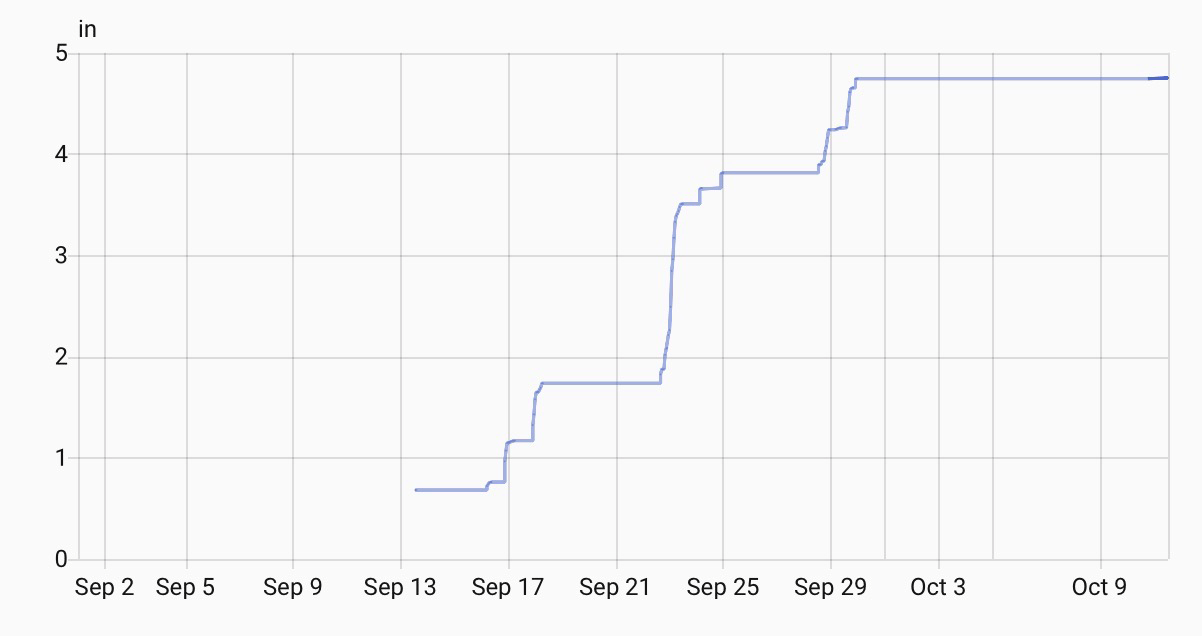
Monsoon Rainfall Chart for Sep - Oct 2026 Chart (Click image to enlarge)